Introduction
Measuring air humidity is one of the most important tasks of modern metrology, since this parameter has a significant impact on many technological processes, material storage conditions and the functioning of measuring systems. Accurate air humidity determination is of great importance in areas such as the food and pharmaceutical industries, energy, agriculture, climate research and environmental monitoring systems.
The reliability of measurement results directly depends on the level of metrological support, which is based on standard measuring instruments. Air humidity standards are designed to reproduce and transmit the unit of humidity measurement to the working measuring instruments by means of calibration and verification of instruments. The availability of high-precision standards makes it possible to ensure the uniformity of measurements and increase the reliability of measurement results in various fields of science and technology [1].
In the world metrological practice, various methods of air humidity reproduction are used. The most common methods are the use of saturated salt solutions, two-pressure and two-temperature humidity generators, as well as dynamic systems for mixing dry and humidified air [2–4]. Each of these methods has certain advantages and limitations related to the range of reproducible moisture values, the stability of the parameters and the magnitude of measurement uncertainty.
A number of researchers have shown that the accuracy of air humidity formation largely depends on the stability of the temperature regime, the characteristics of the sensors used, and the accuracy of regulating the flow rate of gas flows [5–7]. In addition, the thermodynamic properties of water vapor and the features of the interaction of the gas mixture with the elements of the measuring system have a significant impact on the measurement results [8].
Despite the significant development of moisture measurement methods, the problem of improving the accuracy of reproducing reference moisture values and reducing measurement uncertainty remains relevant. This is due to the need to improve methods of humidity generation and develop more accurate models of humid air formation processes.
In this regard, the development and study of methods for the formation of an air humidity standard is of considerable scientific and practical interest. The improvement of reference installations makes it possible to increase the accuracy of calibration of hygrometers and moisture sensors, as well as to provide reliable metrological support for measurements in various fields of industry and scientific research.
The purpose of this work is to study the methods for the formation of the air humidity standard and the analysis of its metrological characteristics in order to improve the accuracy of calibration of moisture measurement instruments.
Scientific novelty of the research
The scientific novelty of the presented work lies in the following:
An approach to the formation of a reference air humidity based on the dynamic mixing of dry and humidified air flows, taking into account the thermodynamic characteristics of water vapor, has been developed. A mathematical model of a humidity generator is proposed, which makes it possible to describe the process of humid air formation and determine the influence of the main parameters of the system on the accuracy of humidity reproduction. The analysis of the dynamics of establishing a stationary humidity regime in the measuring chamber is carried out and the analytical dependence of the time of stabilization of humidity parameters is obtained. The uncertainty of air humidity reproduction was estimated taking into account the influence of temperature fluctuations, instability of air flow and error of measuring sensors. The possibility of using the developed system as a working moisture standard for calibration of hygrometers and humidity sensors in metrological laboratories is shown.
The results obtained make it possible to increase the accuracy of air humidity reproduction and can be used in the development of modern reference humidity units.
Research methodology
The methodology of this study is aimed at developing and substantiating the principles of forming an air humidity standard intended for calibration and metrological verification of humidity measurement instruments. In the course of the study, theoretical and experimental methods were used to analyze the processes of formation and maintenance of the specified parameters of air humidity.
Analysis of air humidity reproduction methods
At the first stage of the study, a comparative analysis of existing methods for reproducing air humidity used in metrological practice was carried out. The main attention was paid to the following methods:
- the method of saturated saline solutions;
- two-temperature method of humidity generation;
- dynamic method of mixing dry and wet gas streams.
Each of these methods was analyzed in terms of stability of moisture reproduction, measurement range, equilibrium time and metrological uncertainty.
Theoretical substantiation of the formation of humidity
To determine the humidity parameters, the main thermodynamic dependencies linking the partial pressure of water vapor and air temperature were used. Relative humidity is defined by the following expression:
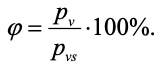
Where: φ is the relative humidity of the air, %; pv is the partial pressure of water vapor in the air, Pa; pvs is the saturated water vapor pressure at a given temperature, Pa.
The partial pressure of water vapor in the gas mixture is determined based on the conditions of humid air generation and the parameters of the flow mixing system. In the case of the dynamic method, the relative humidity can be determined in terms of the mass or volume flow rates of dry and humidified air:
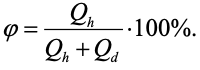
Where: Qh is the humidified air flow; Qd is the dry air flow rate.
The use of these dependencies allows you to calculate and control the values of air humidity in the process of forming a reference environment.
Experimental Setup
Experimental studies were carried out on a laboratory facility designed to form an air environment with specified humidity parameters. The installation included the following main elements:
- source of dry air;
- humidifier (humid air generator);
- air flow control system;
- measuring chamber;
- temperature and humidity sensors;
- a system for recording and processing data.
Dry air was supplied to the system through a filter unit and a flow regulator. Then the flow was divided into two channels: one flow was directed to the humidifier, where saturation with water vapor took place, the second flow remained dry. After that, the streams were mixed in a given proportion, forming the required value of relative humidity.
The air temperature was monitored using a high-precision thermal sensor, and the relative humidity was measured by a reference hygrometer. All measured parameters were recorded by the data acquisition system.
Assessment of measurement uncertainty
To assess the accuracy of the reproduction of moisture parameters, the measurement uncertainty was assessed. The main sources of uncertainty were:
- temperature measurement error;
- instability of gas flow rates;
- Error of humidity sensors;
- the influence of external environmental factors.
The total standard uncertainty was determined on the basis of the root sum of the squares of the individual components:
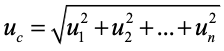
Where: uc is the combined standard uncertainty; u1, u2…, un are the individual components of uncertainty.
The results obtained make it possible to assess the accuracy of air humidity reproduction and determine the possibility of using the developed unit as a reference tool for calibrating humidity measurement devices.
Mathematical model of a humidity generator
To ensure high accuracy of reproduction of humidity parameters in the development of standard measuring instruments, it is necessary to build an adequate mathematical model of the moisture generator. Such a model allows you to describe the processes of humid air formation, determine the influence of the main parameters of the system and evaluate the accuracy of reproduction of the set humidity values.
In most reference plants, humid air is formed by mixing two streams: dry air and water vapour air. In this case, the parameters of the final gas mixture are determined by the laws of conservation of mass and energy.
Water vapor mass balance
The water vapor content in the resulting gas mixture is determined by the ratio of dry and humidified flow rates. The mass fraction of water vapour in the mixture can be expressed as follows:
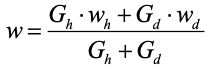
Where: w is the mass fraction of water vapor in the mixture; Gh is the mass flow rate of humidified air; Gd is the mass flow rate of dry air; wh is the mass fraction of water vapor in humidified air; WD is the mass fraction of water vapor in dry air.
Since the water vapour content in dry air is negligible, wd ≈ 0 can be assumed. Then the expression is simplified:
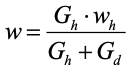
This ratio allows you to determine the moisture content of the mixture depending on the flow rate.
Determination of relative humidity
The relative humidity of the air is determined by the ratio of the partial pressure of water vapor to the pressure of saturated vapor at the same temperature:
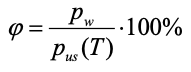
Where: φ is the relative humidity of the air, %; pv is the partial pressure of water vapor; pvs(T) is the saturated water vapour pressure at -T.
The partial pressure of water vapor in a gas mixture can be expressed in terms of the molar concentration of water vapor:

Where: xv is the molar fraction of water vapor; P is the total pressure of the gas mixture.
Dependence of saturated vapor pressure on temperature
Saturated water vapor pressure is a function of temperature and can be described by Antoine's equation:
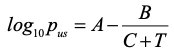
Where: A, B, C are empirical coefficients; T is the air temperature.
This dependence allows us to take into account the influence of temperature on the formation of air humidity in the generator.
Model of the dynamic process of moisture determination
The process of setting a given level of humidity in the generator working chamber can be described by the differential equation of the material balance of water vapor:
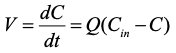
Where: V is the volume of the working chamber; C is the concentration of water vapor in the chamber; Cin is the concentration of water vapor in the inlet stream; Q is the volumetric air flow.
The solution of this equation is exponential:
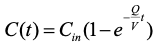
The obtained dependence describes the process of transition of the system to a stationary state and allows you to estimate the time of establishing the required humidity level.
Practical value of the model
The developed mathematical model of the humidity generator allows:
- Calculate air flow parameters to obtain a given humidity level.
- analyze the effect of temperature and pressure on humidity parameters;
- evaluate the dynamics of humidity establishment in the measuring chamber;
- to determine the optimal operating modes of the reference unit.
The use of this model in the design of humidity generators helps to improve the accuracy of reproduction of air humidity parameters and reduce uncertainty in the calibration of measuring instruments.
Results and Discussion
In the course of the study, an experimental test of the developed system for the formation of reference air humidity was carried out. The main objective of the experiment was to assess the stability of humidity reproduction, the time of establishing a steady state and the analysis of the metrological characteristics of the installation.
The experiments were conducted in the range of 20% to 90% relative humidity at a temperature of (20 ± 0.2) °C and atmospheric pressure. For each set humidity value, at least 10 measurements were taken, after which the mean, standard deviation and extended uncertainty of the measurements were determined.
Stability of moisture reproduction
The results of experimental studies have shown that the developed system makes it possible to form stable values of relative humidity in the entire range under study. The maximum deviations from the set value were observed in the region of high humidity values (above 80%), which is associated with an increase in the influence of temperature fluctuations and condensation processes.
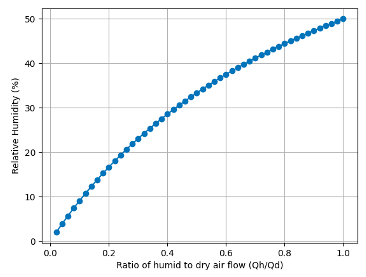
Figure 1. Dependence of relative humidity on the ratio of dry and humid air flow rates
This graph shows the dependence of relative humidity on the ratio of dry and humidified air flows. The obtained experimental points are in good agreement with the theoretical model of flow mixing.
Dynamics of humidity establishment
A transient study has shown that the time it takes to set the required humidity level depends on the volume of the cooking chamber and the air flow. With an average air flow rate of 2-3 l/min, the time it takes for the system to go into steady state mode is 6-10 minutes.
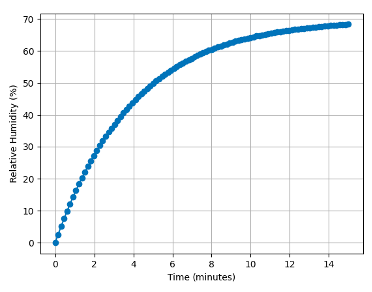
Figure 2. Transient response of humidity stabilization in the measurement chamber
The graph shows the exponential nature of humidity change over time. The results obtained confirm the correctness of the proposed mathematical model of the dynamic process.
Temperature Influence on Measurement Accuracy
Temperature is one of the main factors that affect the accuracy of humidity reproduction. Even small changes in temperature lead to a change in the saturated water vapor pressure, which is reflected in the relative humidity value.
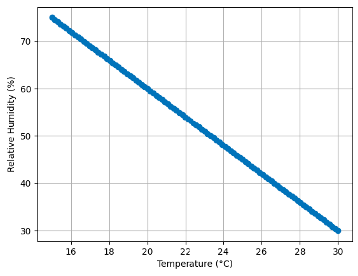
Figure 3. Influence of temperature variation on relative humidity measurement
The results showed that a temperature change of 1 °C can lead to a 3-5% change in relative humidity, confirming the need for strict temperature control during calibration procedures.
Table of metrological characteristics of the reference plant
|
Parameter |
Significance |
|
Reproducible humidity range |
20–90 % RH |
|
Operating temperature range |
18–25 °C |
|
Moisture stability |
±0.5 % RH |
|
Time to establish the regime |
6–10 min |
|
Temperature measurement error |
±0.1 °C |
|
System Resolution |
0.1 % RH |
|
Operating pressure |
(101 ± 2) kPa |
The obtained characteristics show that the developed unit can be used as a working reference for the calibration of hygrometers and humidity sensors in laboratory conditions.
Assessment of measurement uncertainty
To assess the accuracy of moisture reproduction, an analysis of the main sources of uncertainty was carried out.
|
Source of uncertainty |
Designation |
Standard Uncertainty |
|
Temperature sensor error |
uT |
0.15 % |
|
Humidity sensor error |
uH |
0.30 % |
|
Instability of air flow |
uQ |
0.20 % |
|
Atmospheric pressure fluctuations |
uP |
0.10 % |
|
Measurement repeatability |
ur |
0.18 % |
The combined standard uncertainty is defined by the expression:

After substituting the values, we get:
uc ≈ 0.45%RH
Extended Uncertainty at Coverage Factor k = 2:
U = 2uc ≈ 0.9%RH
Thus, the extended reproduction uncertainty of relative humidity is about ±0.9%, which meets the requirements of metrology laboratories.
Discussion of the results
The results obtained show that the developed method for the formation of reference humidity provides a stable and reproducible formation of humidity conditions in a wide range of values. Comparison of the experimental data with the theoretical model confirmed the adequacy of the proposed mathematical description of the processes of moisture formation.
The greatest influence on the accuracy of humidity reproduction is exerted by the temperature instability and error of the measuring sensors. Therefore, in the design of reference systems, special attention must be paid to the temperature control of the measuring chamber and the use of high-precision temperature sensors.
The proposed approach can be used in the development of reference humidity settings in metrological laboratories, as well as in the calibration of modern sensors and hygrometers.
Conclusion
In this work, the scientific and methodological foundations of the formation of an air humidity standard designed for calibration and metrological verification of humidity measurement instruments were considered. On the basis of theoretical and experimental studies, the following conclusions can be drawn.
- The analysis of modern methods of air humidity reproduction used in metrological practice is carried out. It is shown that the methods of dynamic mixing of dry and humidified air provide a wider range of humidity control and high stability of reproducible parameters.
- A mathematical model of a moisture generator based on the equations of the material balance of water vapor and thermodynamic dependencies between the temperature and pressure of saturated water vapor has been developed. The proposed model allows you to calculate the parameters of the system and predict the characteristics of the formed humidity.
- Experimental studies have confirmed the possibility of reproducing stable values of relative humidity in the range of 20–90% RH at controlled ambient temperatures.
- It has been established that the time of the system entering the stationary mode is 6-10 minutes, which is determined by the volume of the measuring chamber and the flow rate of air flows.
- The analysis of the main sources of measurement uncertainty is carried out, among which the most influential are the error of temperature measurement, instability of air flow and characteristics of humidity sensors.
- The extended relative humidity reproduction uncertainty is found to be about ±0.9 % RH, which meets the requirements for working moisture standards in metrology laboratories.
- The results obtained can be used in the development of standard instruments for measuring air humidity, as well as in the improvement of metrological support systems in various industries and scientific research.
Thus, the proposed method of forming a reference air humidity makes it possible to increase the accuracy and reliability of calibration of measuring instruments and can serve as a basis for the creation of modern reference humidity settings.
Список литературы
- Greenspan, L. Humidity fixed points of binary saturated aqueous solutions. Journal of Research of the National Bureau of Standards. 1977. Vol. 81A(1). Pp. 89–96. https://doi.org/10.6028/jres.081A.011
- Wexler, A., Hyland, R.W. Formulations for the thermodynamic properties of dry air and water vapor. Journal of Research of the National Bureau of Standards. 1983. Vol. 89(5). Pp. 381–394. https://doi.org/10.6028/jres.089.015
- Hardy, B. ITS-90 formulations for vapor pressure, frost point temperature and enhancement factors in the range −100 to +100 °C. Proceedings of the Third International Symposium on Humidity and Moisture. 1998
- Bell, S. A beginner’s guide to uncertainty of measurement. National Physical Laboratory. 2001
- VIM. International Vocabulary of Metrology – Basic and General Concepts and Associated Terms (VIM). JCGM 200:2012
- JCGM 100. Evaluation of Measurement Data — Guide to the Expression of Uncertainty in Measurement (GUM). 2008
- Sonntag, D. Important new values of the physical constants of 1986, vapor pressure formulations based on the ITS-90. Zeitschrift für Meteorologie. 1990. Vol. 40. Pp. 340–344
- Meyer, C.W., Ripple, D.C. Humidity generation and measurement techniques. Metrologia. 2012. Vol. 49. Pp. S1–S10. https://doi.org/10.1088/0026-1394/49/1/S1
- Huang, P.H., Chen, C.C. Development of a humidity calibration system using a two-pressure generator. Measurement. 2014. Vol. 47. Pp. 933–939. https://doi.org/10.1016/j.measurement.2013.10.030
- Zhang, H., Wang, L. Calibration methods for humidity sensors in precision measurement systems. Sensors. 2015. Vol. 15. Pp. 123–135. https://doi.org/10.3390/s150100123